don quixote edith grossman pdf
Don Quixote Edith Grossman PDF: A Comprehensive Guide
Don Quixote, expertly translated by Edith Grossman, is widely available as a PDF, offering readers access to Cervantes’ masterpiece in a convenient digital format.
Grossman’s translation is celebrated for its fidelity and readability, making the PDF version a popular choice for students and enthusiasts alike;
The digital format allows for easy searching and portability, enhancing the reading experience of this classic novel.
Edith Grossman’s 1995 translation of Don Quixote stands as a landmark achievement, lauded for its vibrant prose and commitment to capturing the spirit of Cervantes’ original work. Unlike earlier translations, Grossman aimed for a contemporary English voice, avoiding archaic language while preserving the novel’s inherent humor and pathos.
The PDF format of her translation offers accessibility to a broad audience, allowing readers to engage with this literary giant on various devices. Grossman’s approach prioritized readability, ensuring that modern readers could fully appreciate the nuances of Cervantes’ storytelling. She meticulously considered the cultural context, striving for accuracy in conveying the subtleties of 17th-century Spain.
Her work revitalized interest in Don Quixote, making it accessible to a new generation of readers through the convenient and widely distributed PDF version.
Historical Context of the Translation
Prior to Edith Grossman’s 1995 translation, English-language versions of Don Quixote often relied on 17th and 18th-century interpretations, employing archaic language that distanced modern readers from Cervantes’ intent. These earlier translations, while historically significant, sometimes prioritized literal accuracy over stylistic fluency.
Grossman’s work emerged during a period of renewed interest in literary translation, emphasizing the importance of conveying not just the meaning, but also the feel of the original text. The rise of digital publishing and the increasing availability of PDF formats further facilitated the dissemination of her translation.

Her translation arrived at a time when a more accessible and engaging Don Quixote was desired, bridging the gap between the historical masterpiece and contemporary readership, readily available as a PDF.
Edith Grossman’s Approach to Don Quixote
Edith Grossman aimed to create a modern English version of Don Quixote that captured the novel’s energy and humor without sacrificing its complexity. She prioritized readability, opting for a style that felt contemporary while remaining faithful to Cervantes’ voice.
Unlike previous translators who sometimes imposed 17th-century English conventions, Grossman sought to recreate the experience of reading Cervantes in 17th-century Spain. This involved careful consideration of rhythm, tone, and colloquialisms.
Her approach, evident in the widely circulated PDF version, focused on conveying the nuances of Cervantes’ prose, making the novel accessible to a broader audience while preserving its literary merit. Grossman’s translation is celebrated for its artistic sensitivity.

Understanding the PDF Format & Availability
Don Quixote’s Grossman translation in PDF format offers portability and searchability. Legal copies are available through major booksellers and digital libraries, ensuring accessible reading.
Where to Find the Edith Grossman PDF Legally
Obtaining a legal PDF copy of Edith Grossman’s Don Quixote is crucial to support the author, translator, and publisher. Several reputable online booksellers, such as Amazon, Barnes & Noble, and Kobo, offer the digital edition for purchase and download.
Digital library services like OverDrive and Libby, often accessible through local public libraries, frequently feature the Grossman translation as an ebook available for borrowing. Checking your library’s digital collection is a cost-effective and legal way to access the novel.
Furthermore, the publisher’s website, typically Vintage Books or Knopf, may directly sell the PDF version. Avoid unauthorized download sites, as these often distribute pirated copies and may expose your device to malware. Prioritizing legal sources ensures a quality reading experience and ethical consumption of literary works.
PDF Features and Accessibility
The Edith Grossman Don Quixote PDF typically offers several beneficial features. Most versions are fully searchable, allowing readers to quickly locate specific passages, characters, or themes within the extensive text. Adjustable font sizes and styles enhance readability for diverse visual preferences.
Many PDF readers support features like bookmarking, highlighting, and note-taking, facilitating in-depth study and analysis of the novel. Accessibility options, such as screen reader compatibility, are often included, making the text available to visually impaired readers.
The reflowable text capability, present in some PDF viewers, adapts the layout to different screen sizes, improving the reading experience on various devices. These features collectively contribute to a versatile and engaging digital reading experience.
Compatibility with Different Devices
The Edith Grossman Don Quixote PDF demonstrates broad compatibility across a wide range of devices. It’s readily accessible on computers (Windows, macOS, Linux) using standard PDF readers like Adobe Acrobat Reader, which is often free to download.
Tablets (iPads, Android tablets) and smartphones (iPhones, Android phones) easily support PDF viewing through dedicated apps or built-in functionality. E-readers, such as Kindles, can also display PDFs, though formatting may require adjustment for optimal reading.
Cloud storage services (Google Drive, Dropbox) enable access to the PDF from any device with an internet connection. This widespread compatibility ensures a seamless reading experience regardless of the chosen platform.

Don Quixote: Core Themes & Characters
Don Quixote’s PDF, through Grossman’s translation, vividly portrays themes of idealism, reality, and societal critique, focusing on the iconic characters of Quixote and Sancho.
The Character of Don Quixote
Don Quixote, as presented in Edith Grossman’s acclaimed PDF translation, is a compelling figure driven by chivalric romances. He embodies a fascinating delusion, believing himself a knight-errant in a world that no longer values such ideals. Grossman’s rendering captures the nuances of his descent into madness, yet simultaneously highlights his inherent nobility and unwavering commitment to his self-imposed mission.
The PDF allows readers to closely examine Quixote’s internal struggles and the contrast between his perceived reality and the mundane world around him. His character is not merely comedic; Grossman’s translation reveals a poignant exploration of aging, disillusionment, and the power of imagination. He is a complex individual, simultaneously foolish and admirable, whose journey resonates deeply with readers centuries later.
Through Grossman’s skillful prose, the PDF version showcases Quixote’s unwavering belief in justice and his desire to right the wrongs of the world, even if those wrongs exist only in his mind.
Sancho Panza: A Foil to Quixote
Sancho Panza, brilliantly portrayed in Edith Grossman’s PDF translation of Don Quixote, serves as a crucial foil to the idealistic knight. He represents pragmatism, common sense, and a grounded connection to reality – qualities starkly contrasting Quixote’s fantastical worldview. The PDF format allows for a detailed examination of their dynamic, highlighting Sancho’s earthy wisdom and his initial motivations driven by the promise of material reward.
Grossman’s translation expertly captures Sancho’s evolving character, showcasing his growing affection for Quixote despite his frequent exasperation with the knight’s delusions. He embodies the voice of reason, yet gradually becomes influenced by Quixote’s idealism, demonstrating a subtle transformation throughout their adventures.
The PDF enables readers to appreciate Sancho’s humor and his role as a relatable, human counterpoint to Quixote’s extraordinary persona.
The Theme of Illusion vs. Reality
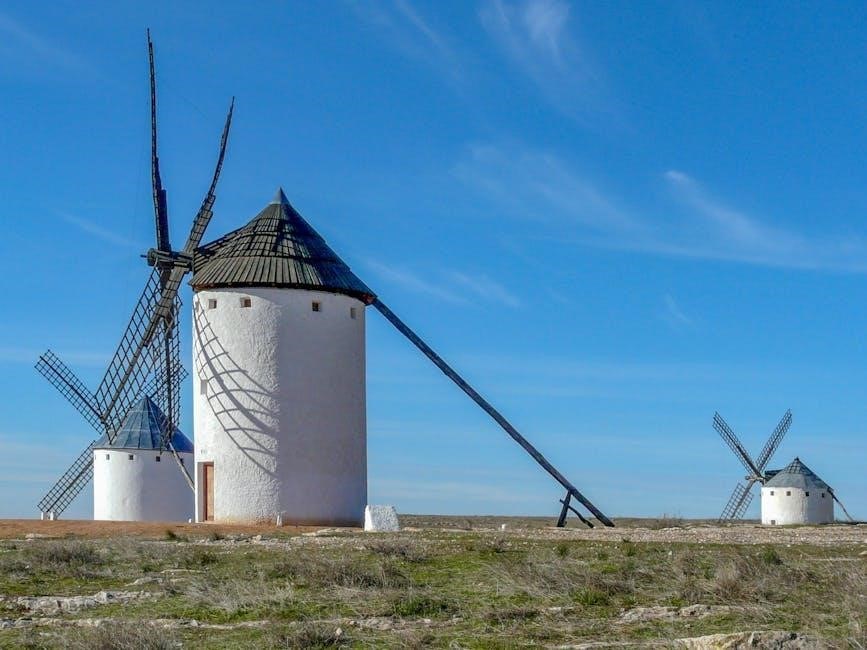
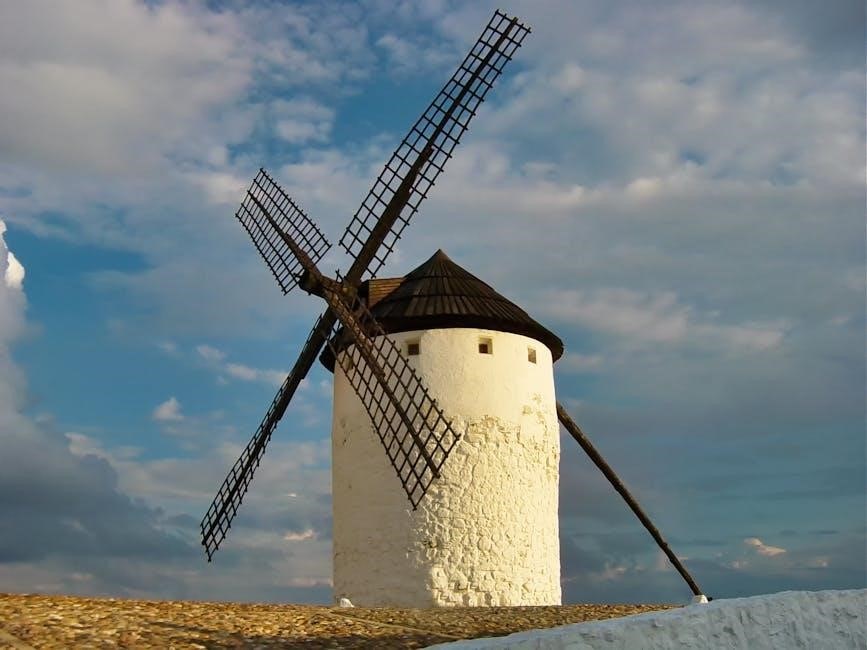
Don Quixote, as presented in Edith Grossman’s acclaimed PDF translation, profoundly explores the complex interplay between illusion and reality. Quixote’s descent into madness causes him to perceive the world through a distorted lens, transforming windmills into giants and inns into castles. Grossman’s rendering meticulously conveys this subjective experience, allowing readers to witness Quixote’s unwavering belief in his fabricated reality.
The PDF format facilitates a close reading of Cervantes’ narrative, revealing how the novel constantly questions the nature of perception and truth. The contrast between Quixote’s illusions and the objective world creates both comedic and tragic effects.
Grossman’s translation emphasizes the novel’s enduring relevance, demonstrating how easily individuals can construct their own realities, detached from objective truth.
Satire and Social Commentary in the Novel
Edith Grossman’s PDF translation of Don Quixote brilliantly preserves Cervantes’ sharp satire and insightful social commentary. The novel skewers the chivalric romances popular at the time, exposing their unrealistic ideals and outdated conventions. Grossman’s nuanced language ensures that the humor and irony are fully accessible to modern readers.
Through Quixote’s adventures, Cervantes critiques the rigid social hierarchy of 17th-century Spain, highlighting the plight of the marginalized and the hypocrisy of the aristocracy. The PDF format allows for focused analysis of these satirical elements.

Grossman’s work underscores how Cervantes used humor to address serious social issues, making Don Quixote a timeless work of social critique.

Analyzing Grossman’s Translation Choices
Don Quixote’s PDF, via Grossman’s translation, showcases deliberate choices maintaining Cervantes’ voice while navigating archaic language and cultural nuances for a modern English readership.
Maintaining Cervantes’ Voice
Edith Grossman’s approach to translating Don Quixote, available in PDF format, prioritized preserving the original author’s distinctive voice. She aimed not for literal equivalence, but for a recreation of Cervantes’ style in contemporary English. This involved capturing the novel’s humor, irony, and narrative energy.
Grossman consciously avoided overly formal or archaic language that might distance modern readers, instead opting for a vibrant and engaging prose style. She understood that Cervantes’ voice wasn’t simply about word choice, but also about rhythm, pacing, and the overall tone of the narrative. The PDF allows readers to experience this carefully crafted voice directly.
Her success in this endeavor is a key reason why her translation is so highly regarded, offering a reading experience that feels both authentic to the original and accessible to a new generation of readers enjoying the Don Quixote PDF.
Handling Archaic Language
Don Quixote, even in its original Spanish, contains language reflecting the 17th century. Edith Grossman’s translation, readily available as a PDF, skillfully navigated this challenge. She avoided simply replicating archaic English phrasing, which would feel artificial to modern readers.
Instead, Grossman opted for a nuanced approach, conveying the sense of the older language through careful word choice and sentence structure. She aimed to evoke the period without sacrificing clarity or readability. The PDF format allows for close examination of these choices.
This involved finding contemporary equivalents that captured the formality or social context of Cervantes’ original terms. Grossman’s goal was to make the novel accessible while still hinting at its historical roots, enriching the reading experience within the Don Quixote PDF.
Cultural Nuances in Translation
Edith Grossman’s Don Quixote PDF translation meticulously addresses the cultural context embedded within Cervantes’ work. The novel is steeped in Spanish customs, social hierarchies, and literary traditions of the Golden Age. Simply translating words isn’t enough; understanding the underlying cultural assumptions is crucial.
Grossman expertly navigated references to chivalric romances, honor codes, and societal expectations. She provided subtle cues for modern readers unfamiliar with these nuances, avoiding overly explanatory footnotes that would disrupt the narrative flow. The PDF format allows readers to revisit passages and appreciate these layers.
Her translation preserves the spirit of 17th-century Spain, offering a culturally sensitive rendition that enhances the novel’s richness and depth, making the Don Quixote PDF a truly immersive experience.

The Significance of “Don” and “Doña”
Edith Grossman’s Don Quixote PDF carefully handles “Don” and “Doña,” Spanish honorifics denoting social status. These titles, originating from Latin, are crucial for character portrayal.
Maintaining their nuance enriches the PDF’s authenticity.

Etymological Origins of “Don” and “Doña”
The terms “Don” and “Doña” boast rich etymological roots, tracing back to the Latin “domĭnus” (lord) and “domĭna” (lady), respectively. These titles weren’t merely designations of nobility but signified respect and social standing within Spanish society. Understanding this origin is vital when engaging with Edith Grossman’s translation of Don Quixote in PDF format.
While the etymology is clear, the usage evolved over time. Initially reserved for the aristocracy, “Don” and “Doña” gradually extended to individuals of prominence or those deserving honor. Grossman’s translation, accessible in PDF, likely preserves this historical context, allowing readers to appreciate the subtleties of Cervantes’ original intent. The careful rendering of these titles contributes to the authenticity and depth of the reading experience within the PDF version.
The nuances of these honorifics are essential for interpreting character interactions and societal structures within the novel.
Usage in Spanish Literature and Titles
“Don” and “Doña” are ubiquitous throughout Spanish literature, functioning as more than mere titles; they signify character status and societal roles. In Edith Grossman’s acclaimed translation of Don Quixote, readily available as a PDF, these honorifics are consistently employed, mirroring Cervantes’ original intent. The PDF format allows for easy reference and analysis of their frequent appearance.
Historically, these titles denoted nobility, but their usage broadened to encompass individuals of respect. Don Quixote itself exemplifies this, with the protagonist adopting the title to embody chivalric ideals. Grossman’s careful attention to these details, evident in the PDF version, enhances the reader’s understanding of the novel’s social fabric.
The consistent use of “Don” and “Doña” in Spanish literary tradition underscores their cultural significance, faithfully preserved in Grossman’s translation.
Translation Considerations for “Don” and “Doña”
Translating “Don” and “Doña” presents unique challenges for Edith Grossman in her PDF-accessible rendition of Don Quixote. A direct equivalent doesn’t fully capture the nuances of Spanish social convention. Simply rendering them as “Sir” and “Madam” feels inadequate, lacking the historical weight and implied characterization.
Grossman’s decision to retain “Don” and “Doña” in the English text, as seen in the PDF, is a deliberate choice. It preserves a sense of the original Spanish context, allowing readers to engage with the cultural significance embedded within these titles. This approach avoids flattening the characters and maintains a connection to the novel’s origins.
The PDF format facilitates close reading, enabling readers to observe how these titles contribute to the overall texture and meaning of Cervantes’ work.
Technical Aspects of the PDF
Edith Grossman’s Don Quixote PDF offers searchable text and reasonable file sizes for easy download and navigation across various devices.
Digital Rights Management (DRM) is generally absent, promoting accessibility.
File Size and Quality
The file size of the Edith Grossman translation of Don Quixote in PDF format varies depending on the edition and formatting, but generally ranges between 1MB and 3MB. This relatively small size ensures quick downloads and easy storage on most devices.
Regarding quality, most legally sourced PDF versions maintain high resolution, preserving the text’s clarity and readability. Optical Character Recognition (OCR) is often employed to ensure accurate text rendering, especially in scanned copies. However, the quality can diminish with illegally distributed or poorly scanned versions, potentially leading to formatting errors or illegible characters.
Premium editions may include enhanced features like embedded fonts and optimized images, further improving the visual experience. Always prioritize obtaining the PDF from reputable sources to guarantee a high-quality reading experience of this literary masterpiece.
Searchability and Navigation
A significant advantage of the Edith Grossman Don Quixote PDF is its excellent searchability. Most PDF readers allow users to quickly locate specific words, phrases, or even character names within the text, facilitating research and detailed study of Cervantes’ novel.
Navigation is typically streamlined through clickable table of contents, allowing readers to jump directly to specific chapters or sections. Hyperlinks within the text, if present, can provide access to footnotes or external resources.
Well-formatted PDF versions also include bookmarks, enabling users to save their progress and easily return to important passages. These features greatly enhance the reading experience, making it easier to explore the complexities of Don Quixote.
Digital Rights Management (DRM) Considerations
When acquiring the Edith Grossman Don Quixote PDF, it’s crucial to consider Digital Rights Management (DRM). Legally purchased PDFs may include DRM restrictions, limiting actions like copying, printing, or sharing the file. These measures protect the publisher’s copyright and author’s rights.
However, DRM can sometimes hinder legitimate use, creating inconvenience for readers. Free or illegally obtained PDFs often lack DRM, but accessing them supports copyright infringement.
Readers should verify the source and licensing terms before downloading. Opting for purchases from reputable vendors ensures a legal copy, even with potential DRM limitations, supporting the literary ecosystem.